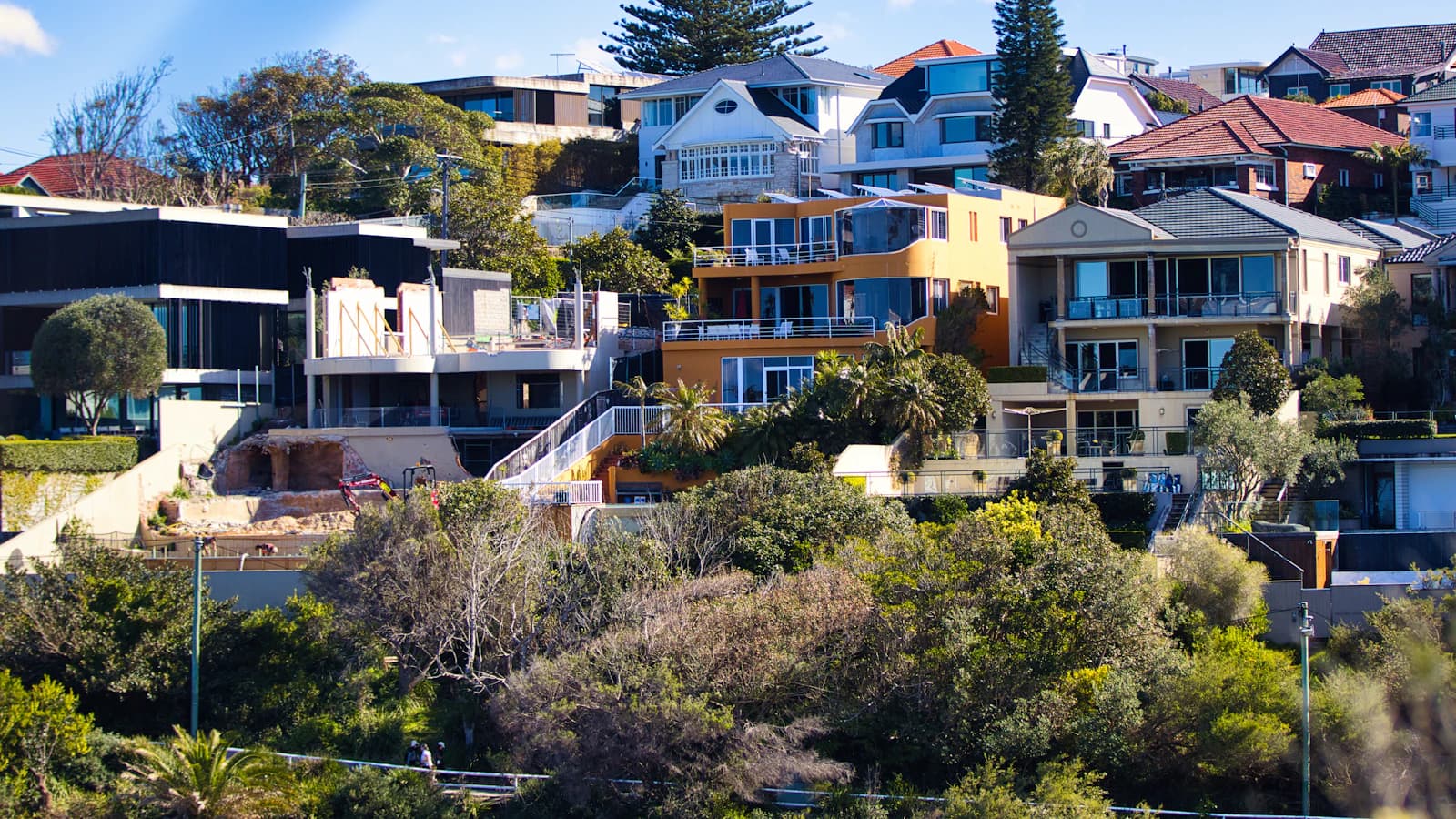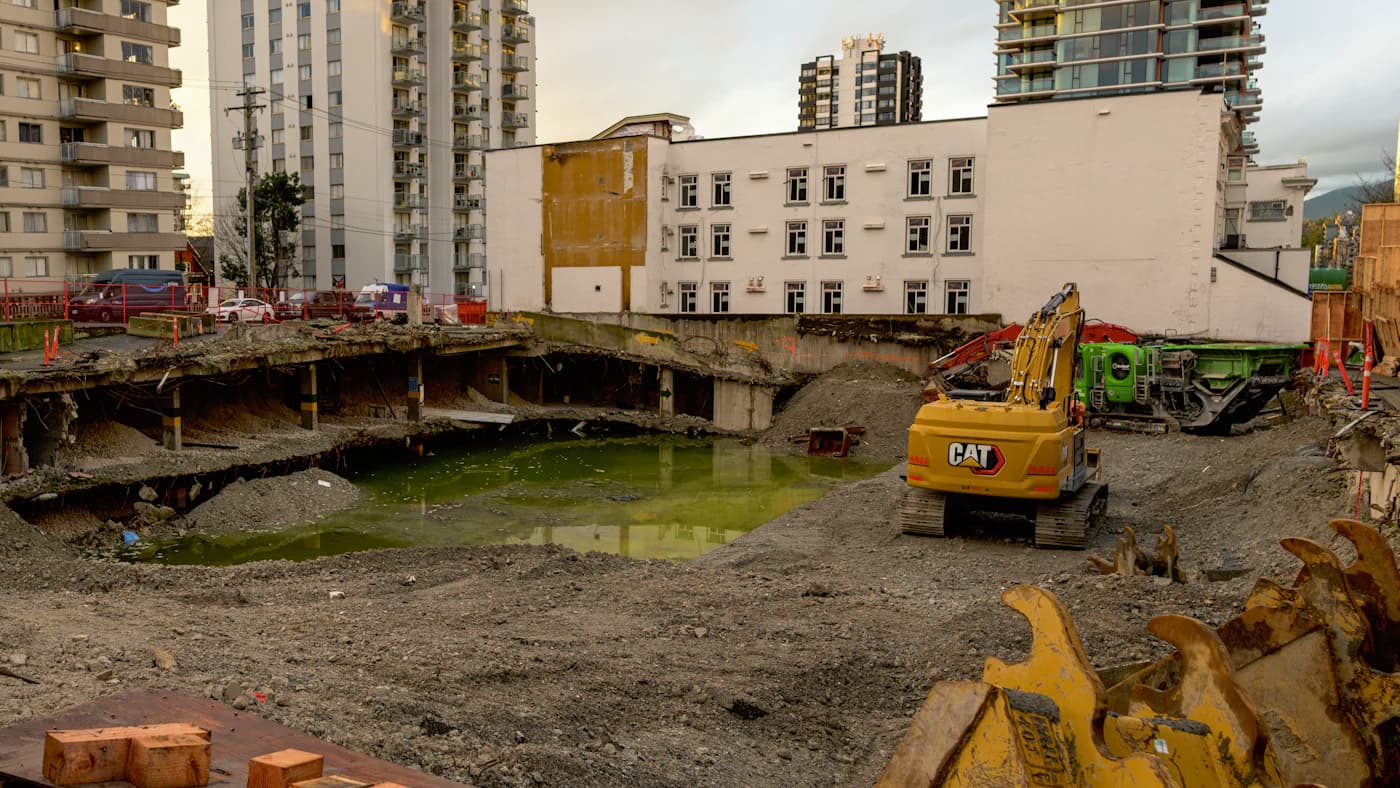
If you're pricing a build on a coastal site between Palm Beach and Manly, the line on the quote that tells you most about the builder is the piling number. Not the kitchen allowance, not the joinery PC sum — the piling.
We've seen the same coastal site quoted for piling at $45,000 by one builder and $180,000 by another, with the difference dressed up as either "value engineering" or "premium service." Neither phrase is doing useful work. The real difference is what the two builders intend to actually install.
What you're paying for, broken down
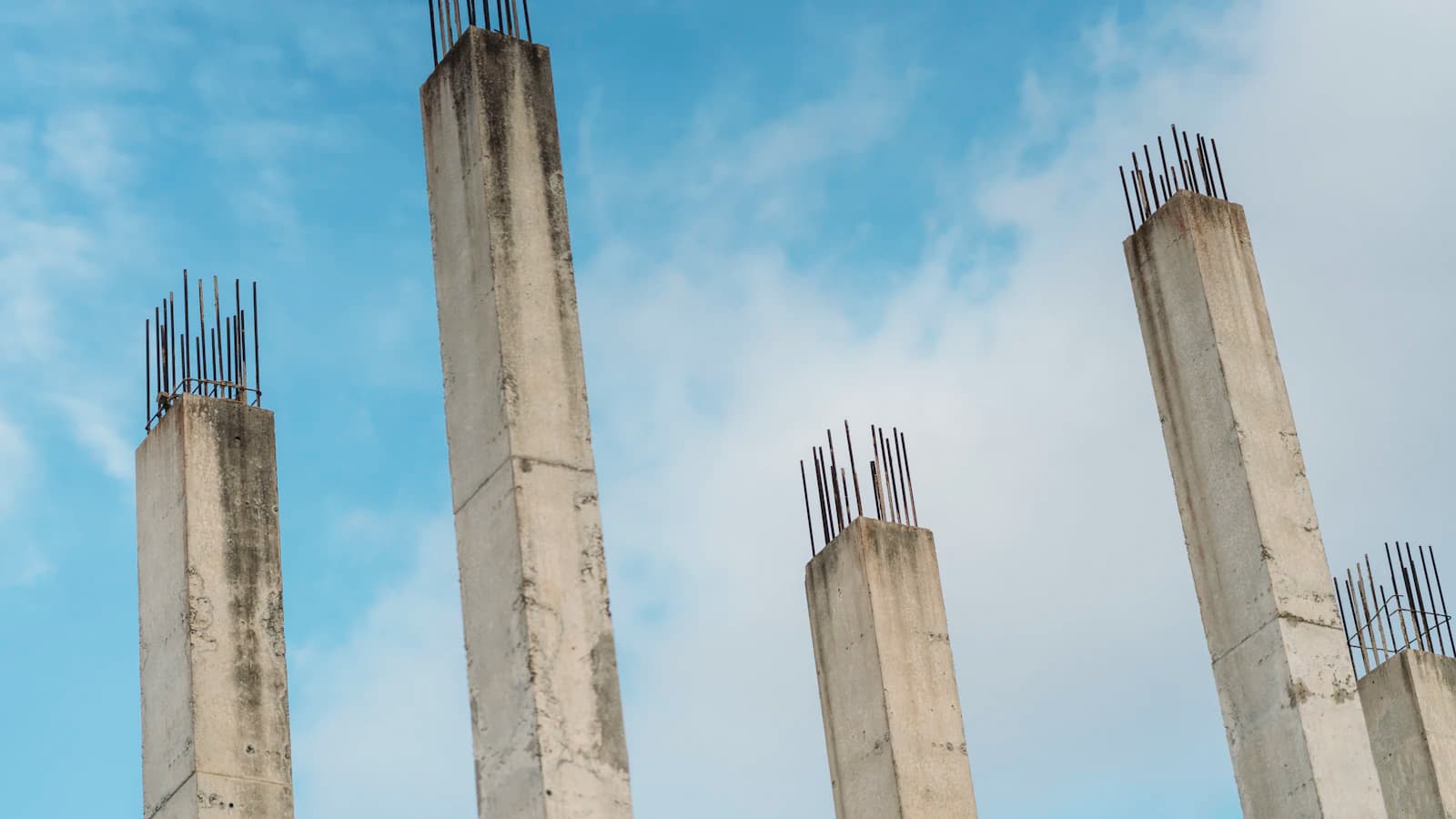
A piled foundation on a Northern Beaches site is typically a system of bored concrete piles socketed into the sandstone bedrock, tied together with ground beams or a pile cap, supporting the structure above. As of mid-2026, on a Sydney coastal job, the realistic cost components are roughly:
- Geotechnical investigation — $6,000 to $14,000 for a residential site, depending on access and the number of bore logs the engineer wants. Two boreholes is the minimum we'd accept on a sloping coastal block; four is more common.
- Piling rig mobilisation — $8,000 to $25,000. Tight coastal sites with restricted access (no truck turning, no neighbour easement, hand-dig required for the first metre) push this up fast. A site with a single direct vehicle approach is the cheapest version of this number you will ever see.
- The piles themselves — $450 to $900 per linear metre for bored, reinforced 450 mm diameter piles socketed into sandstone. A modest house might need 18 to 30 piles at 4 to 8 metres deep — that's 100 to 200 linear metres of pile.
- Pile caps and ground beams — $25,000 to $80,000 in reinforced concrete tying the piles together so they act as a single system. Spec-builders sometimes leave this off the piling line and bury it in the slab number, which is one way a piling quote can look artificially low.
- Coastal corrosion allowance — additional cover to reinforcement, marine-grade reinforcement, or stainless ties where the engineer calls for it. On a salt-exposed site within 1 km of open ocean, this is not optional. It's an extra 5–15% across the reinforced concrete elements.
- Engineer's site inspections during piling — $3,000 to $8,000. Every pile is signed off for depth and socket length before the next one is poured. If your quote doesn't have a line for this, ask why.
Add it up at the lower end and you're at roughly $90,000 to $110,000. At the upper end, comfortably past $250,000.
That range is the honest range. Anything significantly below the lower end is a quote that's missing something — usually the pile caps, the geotech, the inspection regime, or the corrosion allowance.
Where the low quotes hide the gap
We've been called in to look at three coastal builds in the last eighteen months where the original piling quote was around $50,000 and the actual cost-to-finish was closer to $200,000. The pattern was the same in all three:
- The geotechnical report came after the contract was signed. When it landed, the pile lengths needed to go from a quoted 4 m to an actual 7 m. That's a variation, not a fixed-price item.
- The pile caps and ground beams were drawn on the structural drawings but not separately priced in the quote. The builder argued they were "part of the slab." The slab number then ballooned.
- The corrosion allowance was missed. Six months in, the structural engineer required higher-grade reinforcement, the builder issued a variation, and the client paid.
None of those variations are dishonest in isolation. Together, they're the mechanism by which a too-cheap piling quote becomes the most expensive single line on the job.
What a fair piling quote looks like
A piling quote we'd be comfortable signing onto looks like this:
- Geotechnical report attached, dated within the last six months, with at least two boreholes and an engineer-stamped pile schedule.
- Pile diameter, depth range, and socket length explicitly stated, with a stated assumption about rock depth and a clear note on what triggers a variation.
- Pile caps and ground beams priced as their own line, not folded into the slab.
- Marine-grade or higher-cover reinforcement called out where the engineer requires it, with the cost in the number.
- A line for engineer's inspections during piling — typically three to five visits.
- A contingency for additional pile depth, expressed as a per-metre rate, not a lump sum.
If those six items are all on the quote, the price you're seeing is roughly the price you'll pay. If they're missing, the price you're seeing is the deposit on the price you'll pay.
A practical reading
The honest version of this is that piling on a Sydney coastal site is expensive, and the expense is mostly the rig, the engineer, and the rock. A builder who tells you they've found a way around any of those three is telling you something else.
The right time to find out what your piling actually costs is before you sign the contract — not when the rig is on site, the pour is scheduled, and the variation is already in the mail.