The most common phone call we get from a homeowner part-way through someone else's build starts the same way: "the quote was $2.4 million, we're at $2.7 and the frame isn't up yet — how?"
Almost every time, the answer lives in two line items the contract called provisional sums and prime cost items. They're legitimate. They're in every standard residential contract in NSW. And they're where the gap between a fixed-price quote and the actual cost of your house tends to open up.
This article is a plain-language explanation of what they are and how to read them before you sign.
What a provisional sum actually is
A provisional sum is a place-holder figure in your contract for work the builder couldn't price exactly at quote time. The classic examples on a Sydney site:
- Excavation and rock removal, before a geotechnical report is in.
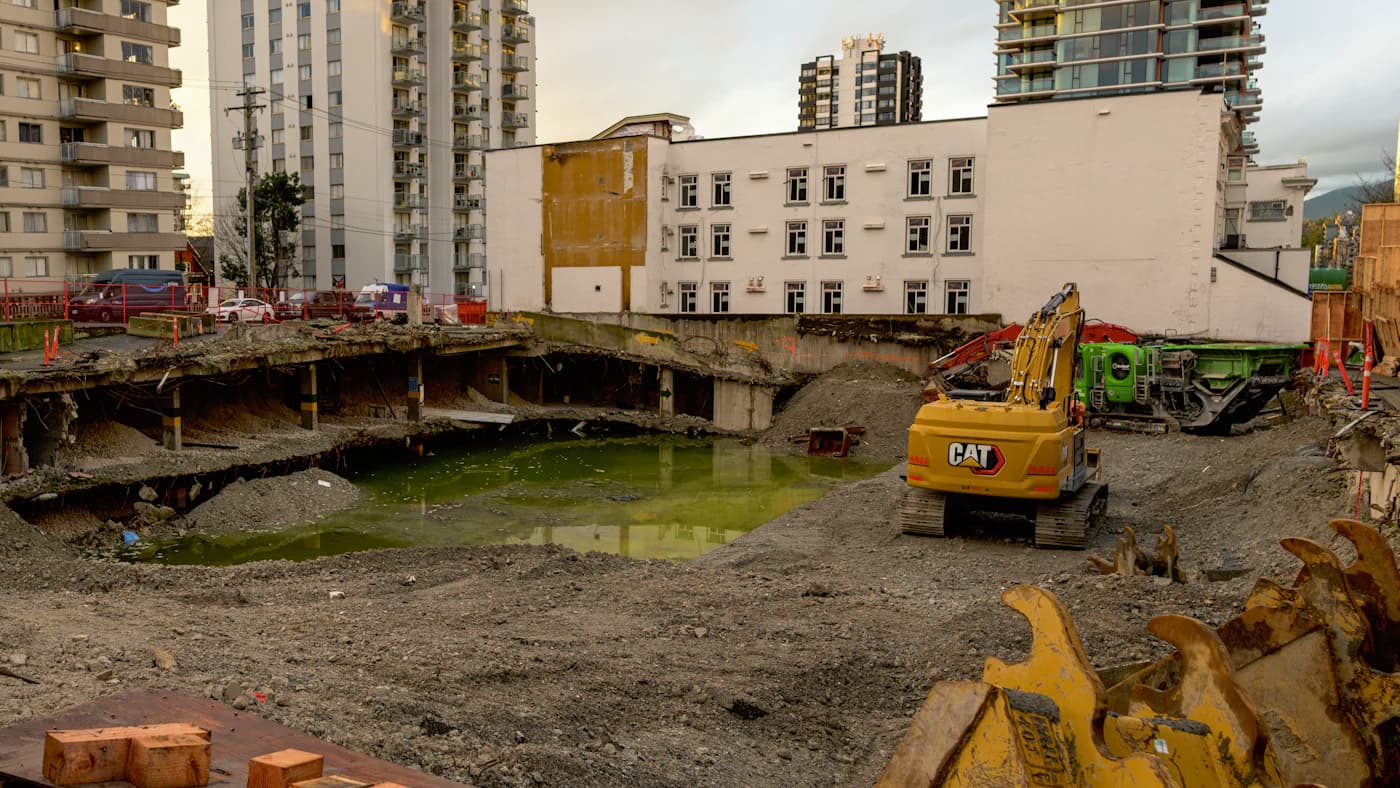
- Service connections, before the council has issued the engineering conditions.
- Stormwater and drainage, where the design depends on what's found underground.
- Underpinning to a neighbour, where the actual extent only gets nailed down once the wall is exposed.
The builder writes a sensible number against each — say, $80,000 for excavation. If the real cost comes in under, you get the difference back. If it comes in over, you pay the over-run, plus the builder's margin on the over-run.
That last clause is where the trouble starts. Most NSW residential contracts let the builder add 15-25 per cent margin on top of a provisional-sum over-run. So a $40,000 rock-removal surprise can become $48,000-$50,000 on your final account, and that's contract-compliant.
What a PC item is
A prime cost item is a fixed allowance for a product the client hasn't selected yet. Tapware. Tiles. Appliances. Light fittings. Joinery hardware. The builder allows, say, $3,500 for kitchen tapware, and you go shopping later.
If your real selections come in at $6,200, the difference plus margin gets added to the contract. PC over-runs are usually the most predictable kind — selections almost always blow out, because the showroom price is rarely what the original allowance assumed.
Why this happens
Builders aren't trying to deceive anyone. There are real engineering reasons these line items exist. You genuinely can't price rock removal before a geotechnical report. You genuinely can't price tiles that haven't been chosen.
The problem is that on a competitive tender, the builder under the most pricing pressure has every incentive to set those allowances as low as plausible. A $60,000 excavation allowance looks better on a quote than $100,000. The headline number wins the job. The over-run becomes a problem for month seven.
We've reviewed quotes from builders we won't name where the entire provisional-sum schedule was thirty per cent low. The job was always going to come in over. The quote just hid it.
How to read these line items before you sign
When you're handed a tender, before you compare totals, do this:
Add up every provisional sum. If they total more than ten per cent of the contract sum on a straightforward site, ask why. Twenty per cent on a complex site is normal. Thirty per cent means the builder has hedged everything they could.
Ask for the basis of each allowance. A $90,000 excavation allowance with no geotech report behind it is a guess. A $90,000 allowance referencing the geotech and itemising rock-removal rates at $X per cubic metre is a quote. Same number, very different document.
Check the PC item list against your tastes. If the PC allowance for kitchen tapware is $2,800 and you've been shopping at Reece or Astra Walker, you're going to blow that line by 100-200 per cent. Better to know now than at month nine.
Compare like with like. When you're choosing between two quotes, two builders can hand you the same headline figure with completely different provisional-sum structures behind it. The lower headline is rarely the lower final cost. We've seen $200,000 swings between builders whose quotes were eight thousand dollars apart on paper.
How we do it
On a Varloch tender, the provisional-sum schedule is a separate page, line-by-line, with the assumption behind each number. If we don't have the information to price something, we say so — and we tell you what would need to be true to convert it to a fixed price. Some clients want us to wait for a geotech before we sign the contract. Some are happy to carry a known unknown and accept that it might move. Either is a real conversation; both end with the client understanding the number.
The Master Builders' standard NSW residential contract — the one most builders use — caps provisional-sum margins, requires written notice of variation, and gives the client the right to inspect actual costs. A lot of homeowners don't know they have that right. You do. Use it.
The phrase to remember
A fixed-price contract isn't a fixed-cost contract. It's a fixed-price-of-the-known-work contract, with the unknown work itemised in two columns on a different page. Read those columns. The honest builder gives you the same final account either way.