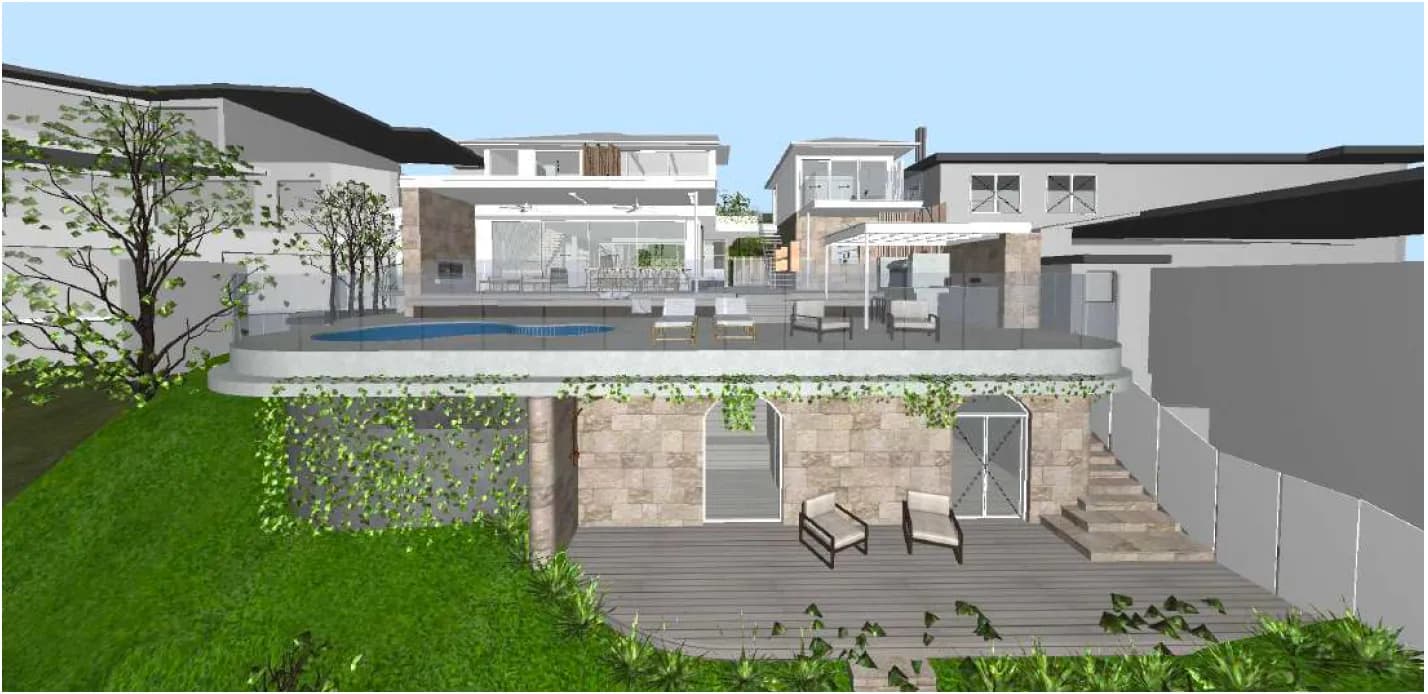
Sydney's northern beaches and lower north shore have a lot of sites that are objectively difficult to build on: steep falls, sandstone shelves, salt air, and rainfall that arrives in serious bursts. We work on these sites a lot. Almost every avoidable structural problem we've been called in to fix on someone else's build started the same way: water was going somewhere it wasn't supposed to, and nobody was looking.
This article is a short field guide to keeping water moving the way it should — for clients who already have a Varloch home, and for anyone trying to understand what their builder should be doing on a sloping site.
What we do during construction
Before you ever see the finished landscaping, the ground around your house is graded so that water flows away from the slab. That's a Building Code of Australia requirement and it's the first thing an inspector checks on handover.
We also install:
- Subsoil drains, where ground conditions need them, to relieve hydrostatic pressure against retaining walls and slabs.
- Silt pits at low points, to trap debris before it blocks the system.
- Weepholes through brick walls, to let any moisture that gets into a cavity drain back out.
- Sub-floor vents, where there's a sub-floor space, to keep air moving so timber doesn't sit in damp.
That system works — but only if it's left to work.
Three ways homeowners accidentally break the drainage
We see the same three mistakes year after year:
1. Landscaping that buries weepholes or sub-floor vents.
Garden beds raised against the wall. Mulch piled high. New paving that lifts the ground level by 100 mm. The weephole that was four bricks above ground level is now at ground level, and water that should drain out of the cavity has nowhere to go. Once a cavity sits wet, brick efflorescence, internal damp patches, and timber rot follow.
2. Solid garden beds against the slab.
A garden bed full of moisture-retaining soil sitting directly against a footing keeps the ground next to the slab perpetually wet. Over years, that moisture migrates through the slab and into the building. Plus, root systems against the footing are an open invitation to termites.
3. Damaged subsoil drains during landscaping.
When a landscaper digs a new bed or installs a retaining wall, they sometimes cut through the subsoil drain we installed and don't tell anyone. The drain stops working silently. Two years later, the retaining wall is wet, the slab edge is moving, and we're looking at remedial work that wasn't necessary.
What to do, ongoing
If you have a Varloch home, these are the rules of thumb:
- Keep paths and paving — not garden beds — directly around the house.
- Don't cover weepholes or sub-floor vents with landscaping. If you can't see them, water can't escape through them.
- Once a year, walk around the house with a hose and run water near each downpipe outlet. Watch where it goes. It should run away from the house, not pool against it.
- After heavy rain, look for new wet patches near the slab. New is the keyword.
- Before any landscaping or paving work, get a plan and check it against the existing drainage system. If you're a Varloch client, send it to us before work starts. Ten minutes of sense-checking saves years of remedial work.
The phrase to remember
A drainage system that works invisibly for twenty years is the same system that, ignored for two, causes structural problems for ten. Water always wins eventually. Your only job, as a homeowner, is to make sure it keeps winning the way the engineer designed it to.